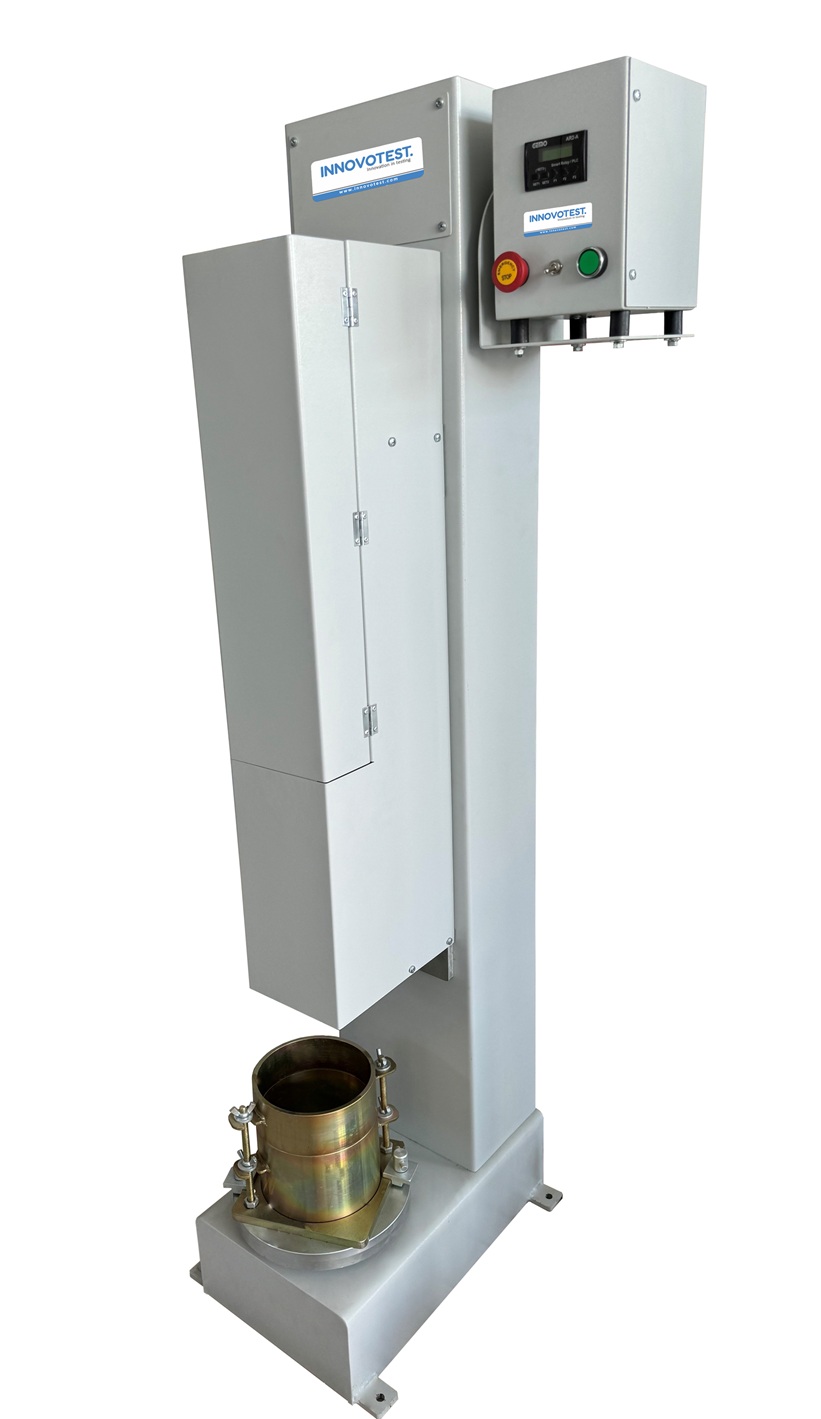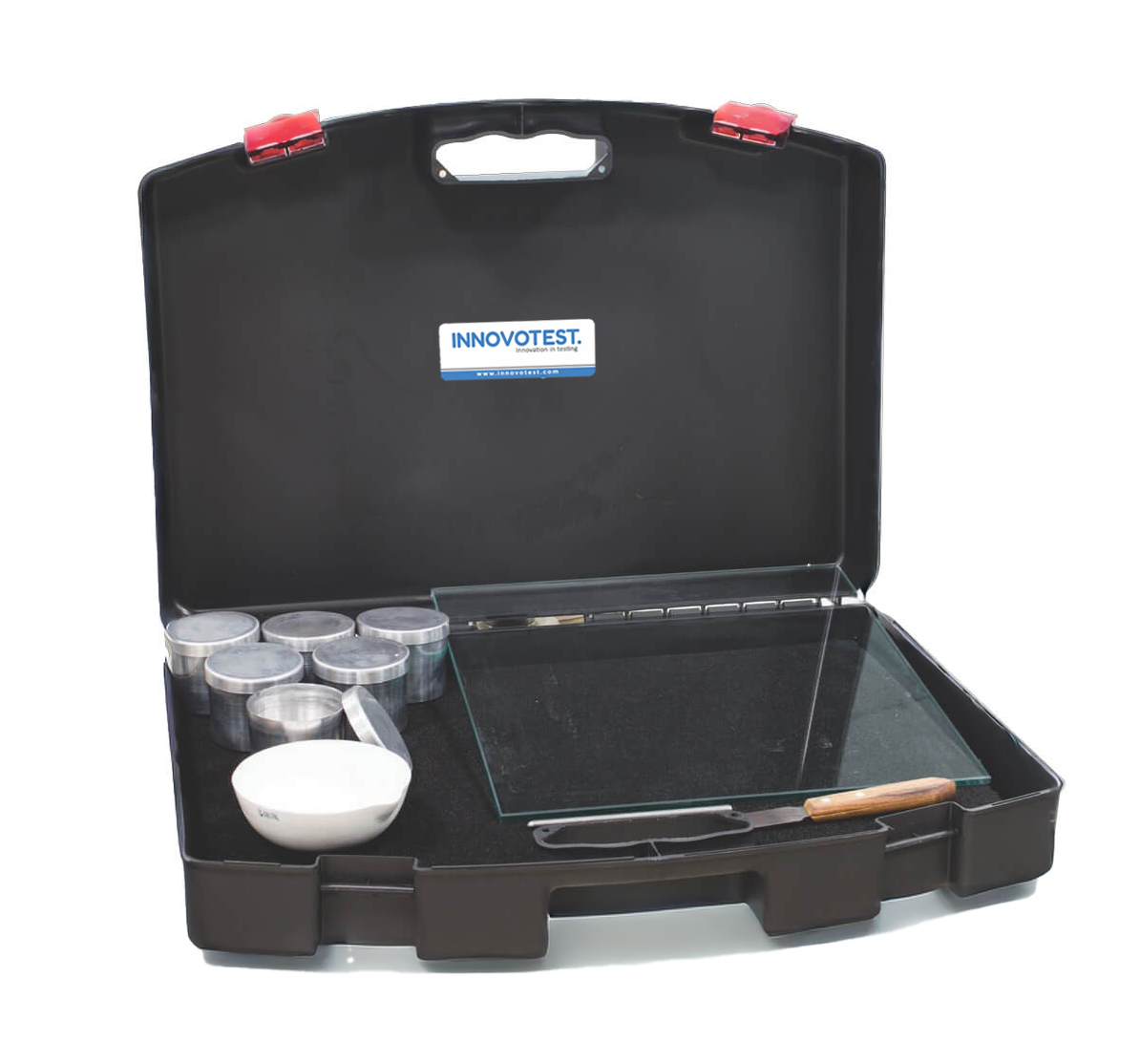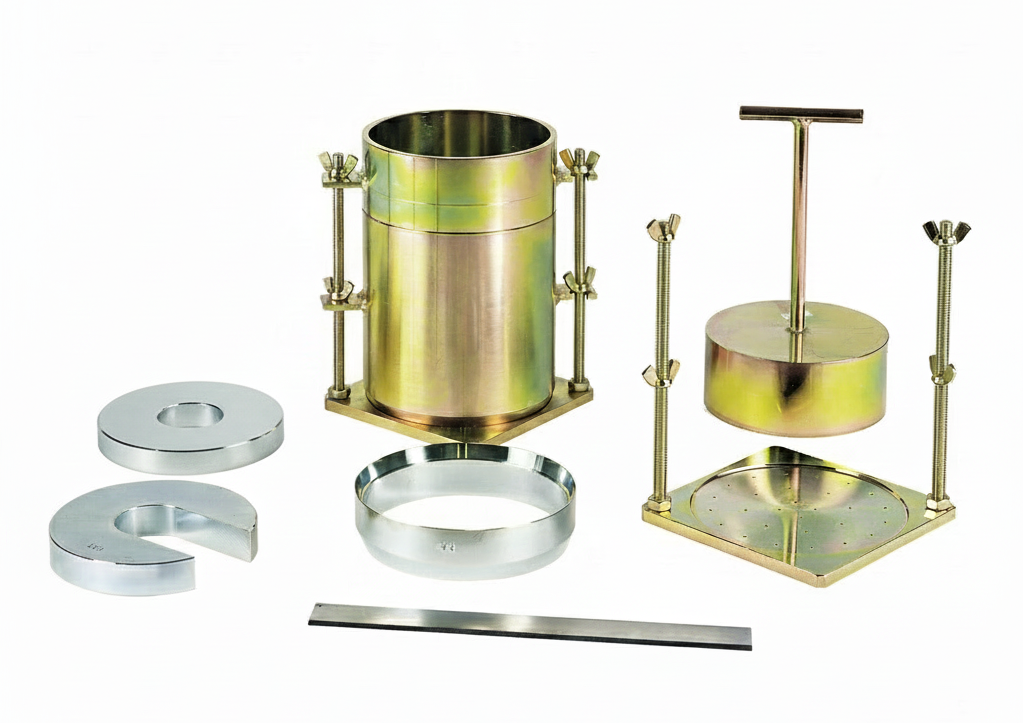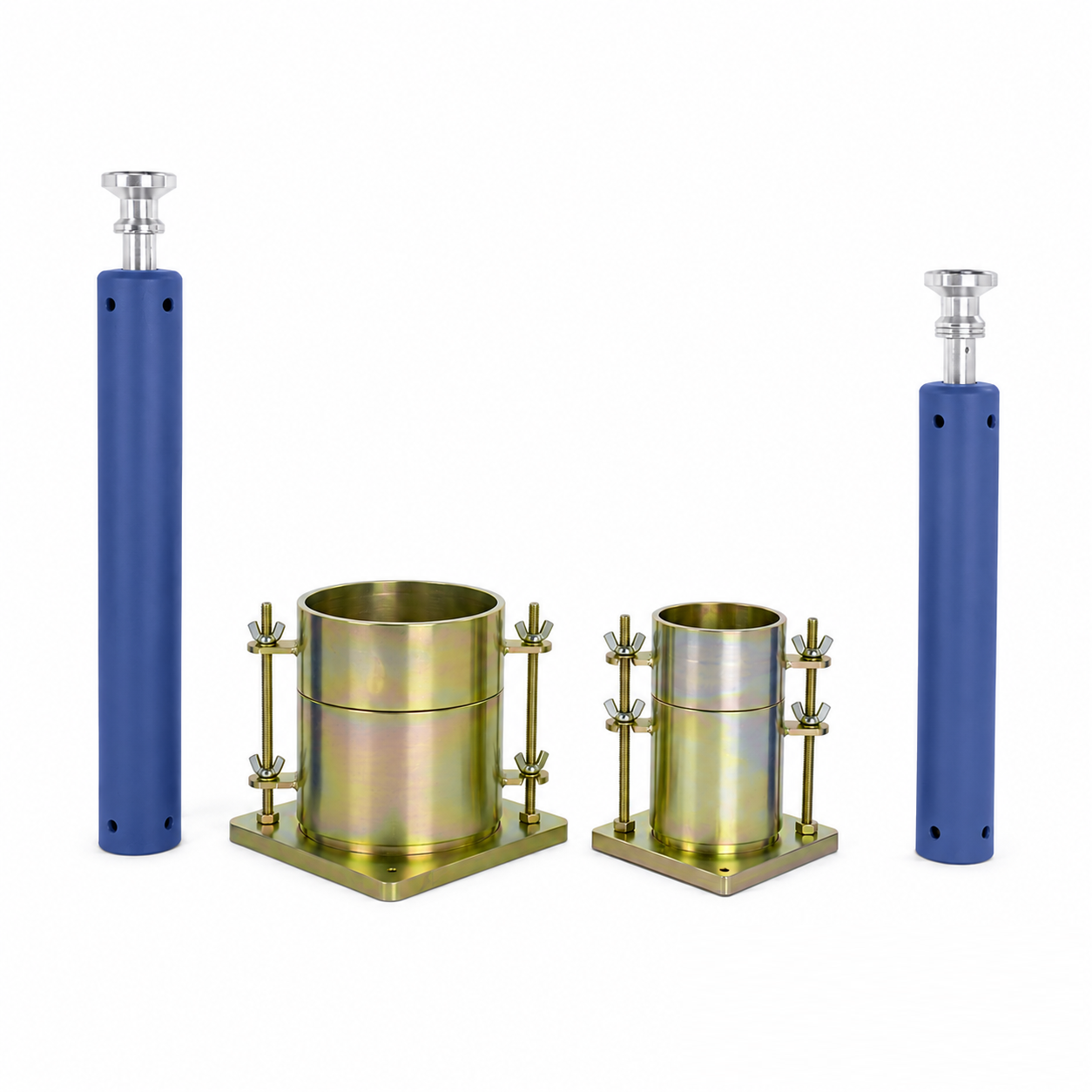


Determining the mechanical properties of soils is a critical step in the design of foundations, embankments, and other geotechnical structures. Construction activities such as building erection, excavation, tunnelling, and similar applications induce stress changes in the subsoil. These effects are accurately simulated through triaxial testing, in which the stress–strain behavior of undisturbed soil specimens is evaluated under controlled stress paths and defined drainage conditions.
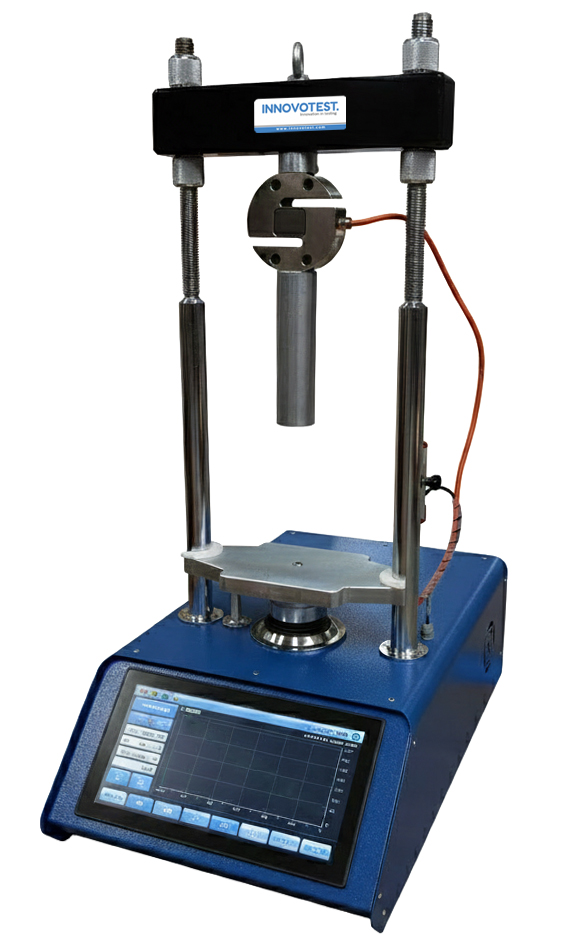
The Innovotest Triaxial Test System is designed to perform fully automated triaxial compression tests on cylindrical undisturbed and remolded soil specimens. The system enables automatic execution, control, and reporting of Unconsolidated Undrained (UU), Consolidated Drained (CD), and Consolidated Undrained (CU) tests, ensuring high accuracy, repeatability, and compliance with geotechnical testing standards.
Unconsolidated Undrained (UU) Test
In the Unconsolidated Undrained (UU) triaxial test, soil specimens—assumed to be fully saturated prior to testing—are placed in a triaxial chamber and subjected to an all-around confining fluid pressure. After the specimen is positioned within the triaxial cell, the cell pressure is increased to a predetermined level using the constant pressure control unit. The specimen is then loaded to failure by applying axial stress at a constant rate of axial strain.
In this test method, neither consolidation nor drainage is permitted. Consequently, the original soil structure and in-situ water content of the specimen remain unchanged throughout the test. Pore water pressure and back pressure are not measured; therefore, the test results are interpreted solely in terms of total stresses under the applied confining pressure.
UU tests are typically performed on a set of three specimens taken from the same soil sample, each subjected to a different confining pressure. As all specimens are considered saturated, the measured undrained shear strength is expected to be similar across the tests.
The test results are presented as plots of principal stress difference versus axial strain. At the condition of maximum principal stress difference—taken as the failure state—Mohr circles are constructed using total stress values. The average undrained shear strength is then determined, and a failure envelope (Mohr envelope) is drawn tangential to the Mohr circles to obtain the undrained cohesion intercept (cu) and the undrained angle of shearing resistance (φu).
Consolidated Undrained (CU) Test and Consolidated Drained (CD) Test
Peak effective strength parameters, namely effective cohesion (c′) and effective angle of internal friction (φ′), may be determined either from Consolidated Undrained (CU) triaxial compression tests with pore water pressure measurement or from Consolidated Drained (CD) triaxial compression tests. These triaxial tests are typically conducted in multiple stages and involve the successive saturation, consolidation, and shearing of three specimens taken from the same soil sample.
Saturation Stage
The saturation stage is performed to ensure that the pore fluid within the specimen is free of entrapped air. Saturation is normally achieved by applying an elevated back pressure, which promotes the dissolution of air within the pore water. The back pressure, representing an imposed pore water pressure, is applied through a volume change device connected to the top of the specimen. Simultaneously, a slightly higher cell pressure is applied to maintain effective confinement.
Both cell pressure and back pressure are increased incrementally, allowing sufficient time for pressure equalization at each stage. The degree of saturation is assessed using Skempton’s pore pressure parameter (B), defined as:
B = Δu / Δσ₃
where Δu is the change in pore water pressure resulting from an applied change in cell pressure Δσ₃. For a fully saturated soil, B approaches unity. Most standard test procedures require a B-value of 0.95 or greater before the specimen is considered fully saturated and the consolidation stage is initiated.
Consolidation Stage
The consolidation phase of an effective stress triaxial test serves two primary purposes. First, three specimens are consolidated under different effective confining pressures to obtain varying strength levels, resulting in well-separated effective stress Mohr circles at failure. Second, the consolidation data are used to determine an appropriate loading rate and the minimum time to failure during the subsequent shearing stage.
The effective consolidation pressure, defined as the difference between cell pressure and back pressure, is typically increased by a factor of two between specimens. The intermediate consolidation pressure is usually selected to approximate the in-situ vertical effective stress. During consolidation, volume change is measured using a volume change device connected to the back pressure line. Pore water pressure is measured at the base of the specimen, while drainage occurs through a porous stone located at the top of the specimen.
The coefficient of consolidation (cᵥ) of cohesive soils can be determined by plotting volume change against the square root of time. Theoretically, the initial 50% of consolidation appears as a straight line on this plot. This line is extrapolated to intersect the horizontal line corresponding to 100% consolidation, and the time intercept at this point (denoted as t₁₀₀ by Bishop and Henkel) is used to calculate the coefficient of consolidation.
Consolidated Undrained (CU) Test – Shearing Stage
Upon completion of consolidation, the specimen is isolated from the back pressure line, and the vertical displacement rate of the loading platen is set based on the consolidation characteristics. During the shearing stage, axial load is applied through the loading ram while measurements of axial deformation, applied load, and pore water pressure are recorded at regular intervals.
The recorded data are used to construct plots of principal stress difference (σ₁ − σ₃) and pore water pressure versus axial strain. Failure is typically defined as the point at which the principal stress difference reaches its maximum value. Effective stress Mohr circles are then constructed at failure for each specimen consolidated under different effective pressures. A straight line drawn tangential to these Mohr circles defines the effective strength envelope, from which the effective strength parameters c′ and φ′ are determined.
Consolidated Drained (CD) Test
The consolidated drained (CD) triaxial compression test, including measurement of specimen volume change during the shearing phase, is performed following a procedure similar to that of the consolidated undrained (CU) test. However, during the shearing stage, the back pressure line remains connected to the specimen, and axial loading is applied at a sufficiently slow rate to ensure full drainage and to prevent the generation of excess pore water pressure.
Due to the requirement for complete drainage, the shearing phase of a drained triaxial test typically takes significantly longer than that of an undrained test with pore pressure measurement. In practice, the duration of the CD shearing stage is generally 7 to 15 times longer than that of a comparable CU test.
Upon completion of shearing, the test results are presented in the form of plots showing principal stress difference and volume change as functions of axial strain. Mohr circles are constructed at failure conditions, and a drained failure envelope is defined. From this envelope, the drained effective strength parameters, namely drained cohesion (c′d) and drained angle of internal friction (φ′d), are determined.
Triaxial testing systems capable of performing CD, CU, and UU tests are fully computer-controlled. Test measurements are automatically recorded and transferred to a computer, where data processing and analysis are carried out using dedicated Triaxial testing software operating under the Windows environment. All recorded data can be exported for further evaluation and reporting using standard spreadsheet software such as Excel.